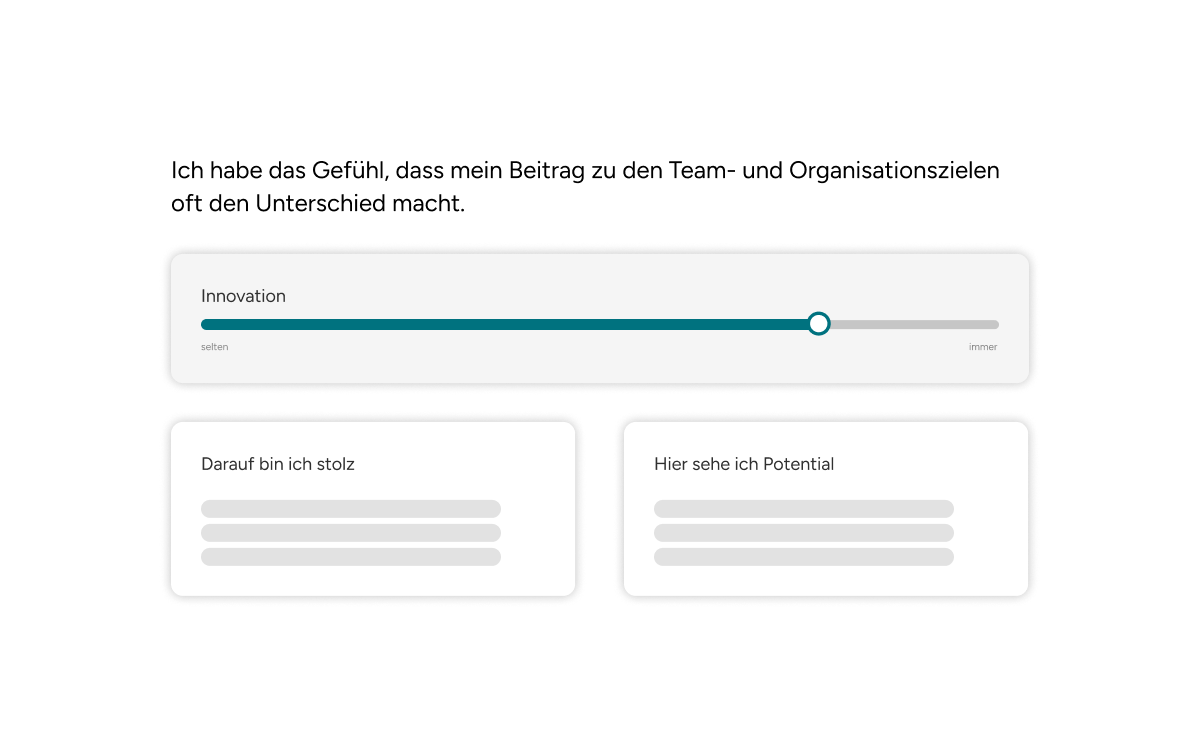
Classic performance conversations look in the rearview mirror and judge. With wyrd, you look ahead and create orientation. wyrd replaces abstract performance indicators or competencies with what really counts: the individual contribution to the company's success.





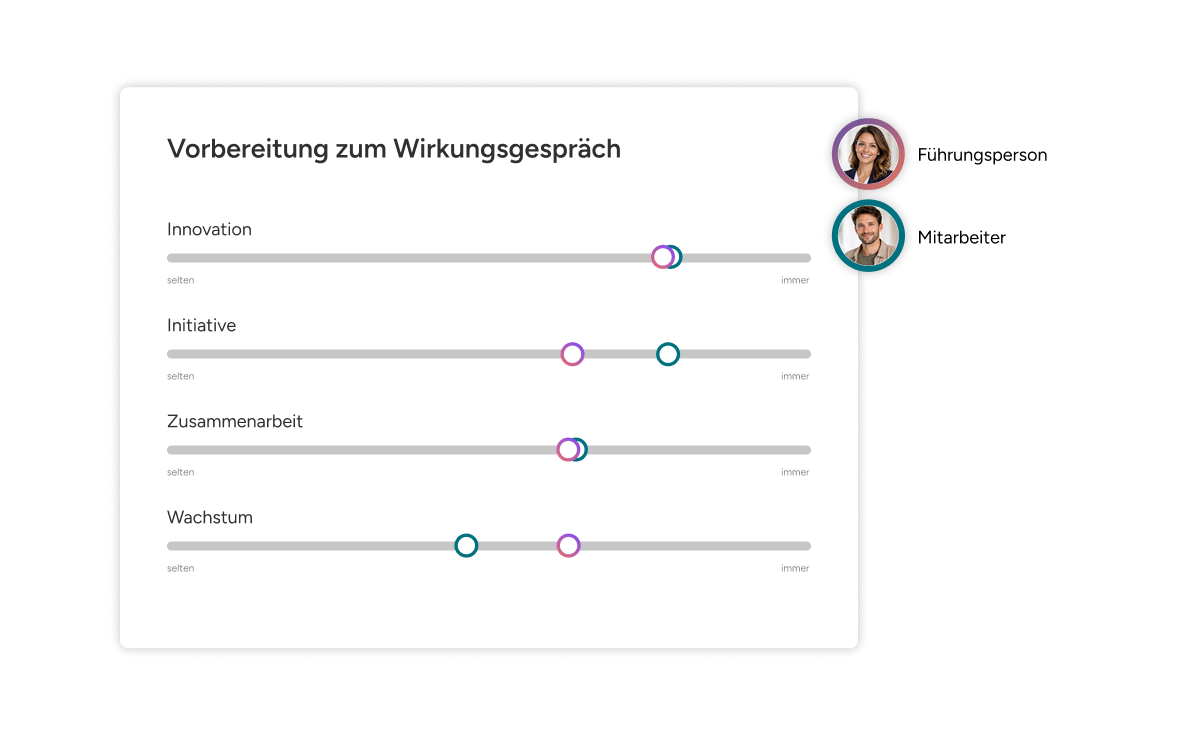
Who doesn't know it: The discomfort before the conversation and the eggshell dance in the dialogue. wyrd changes that: Asynchronous preparation means that the thoughts of both sides lie overtly on the table before the conversation starts. You can then feel this magic in dialogue.

Performance or abstract competencies are difficult to assess — and often not the actual end goal at all. Wyrd is about discussing a person's impact: their specific Contribution to company success. wyrd diverts your focus away from standard criteria to what is really relevant to your values and goals.

People often suck examples out of their fingers before site calls, for example to justify evaluations. wyrd ends this rearview view and this documentary battle. It's about the essence: How do I see my effect? How is it seen? What do I make of it? This comparison of self-image and image of others saves time and creates clarity and trust.

wyrd's focus on resources gives our teams more clarity, direction and strengthens collaboration.
With wyrd, it became even more clear to us how strongly values and attitudes shape leadership.
A real game changer for effective leadership.
The point of view. Instead of evaluating past activities, the focus is on impact, the contribution to success. Nor are abstract lists of competencies checked off, but the specific value contribution to the company is discussed.
To avoid surprises during the conversation. Since the self-assessments and external assessments are visible to both of them before the deadline, the topics are open on the table. This creates psychological security and allows talking time to be used for real exchange instead of just opening up information and managing emotions.
Yes Since the contribution to corporate success is discussed here, the module provides a fair basis or at least a component for salary rounds. This is deliberately separated from the development module so as not to jeopardize the learning atmosphere there.
It is made transparent. Instead of pretending objectivity, the tool superimposes the perception of employees and managers. It gets exciting where the pictures differ. The tool helps to discuss these gaps constructively.
No, the “documentary battle” is omitted. Instead of frantically looking for evidence of past behavior, wyrd limits oneself to the essence (1x “Keep it up” and 1x “There is still potential” per question). This saves time in preparation.
Absolutely. In fast-paced environments, annual goals often quickly become out of date. It is also very challenging to define meaningful and at the same time measurable goals. The focus on “impact” allows a more dynamic view: What value contribution does the person currently make to the team and the company? This is often more relevant than ticking off old goals.
Thanks to transparent preparation, both sides get to the core faster. Preparation takes about 20 minutes and we recommend 30-40 minutes for the interview.
This is where the tool provides the greatest value. The visualization makes the discrepancy neutrally visible. This constructively directs the conversation to the reasons for different perceptions. This is how people talk about expectations instead of arguing about right or wrong.
Yes, together with the development module. And more than that: wyrd enables more flexible cycles. Whether quarterly or half-yearly, the process is lean enough to discuss impact (and development) when it makes sense.