
Blog
March 2026
Why OKRs are so powerful — and why they so often fail in practice.
Background to the failure of classic OKR systems and strategies for contemporary leadership with orientation and radical focus on the essentials.
Focus connects vision & strategy with the initiative of your teams. Company goals set the direction – teams actively shape how they contribute. Focus without micromanagement.





Strategy stays visible – and teams decide how they contribute most. No goals pushed down through hierarchies. Instead: teams that understand what matters – and take ownership.

Fewer parallel topics. More speed. Teams work on what really counts – and consciously let the rest go. Impact over busyness.

No extra meetings. Relevant conversations happen where the work happens – directly in Slack, Teams or Google Chat. Progress and blockers surface before they become a problem.
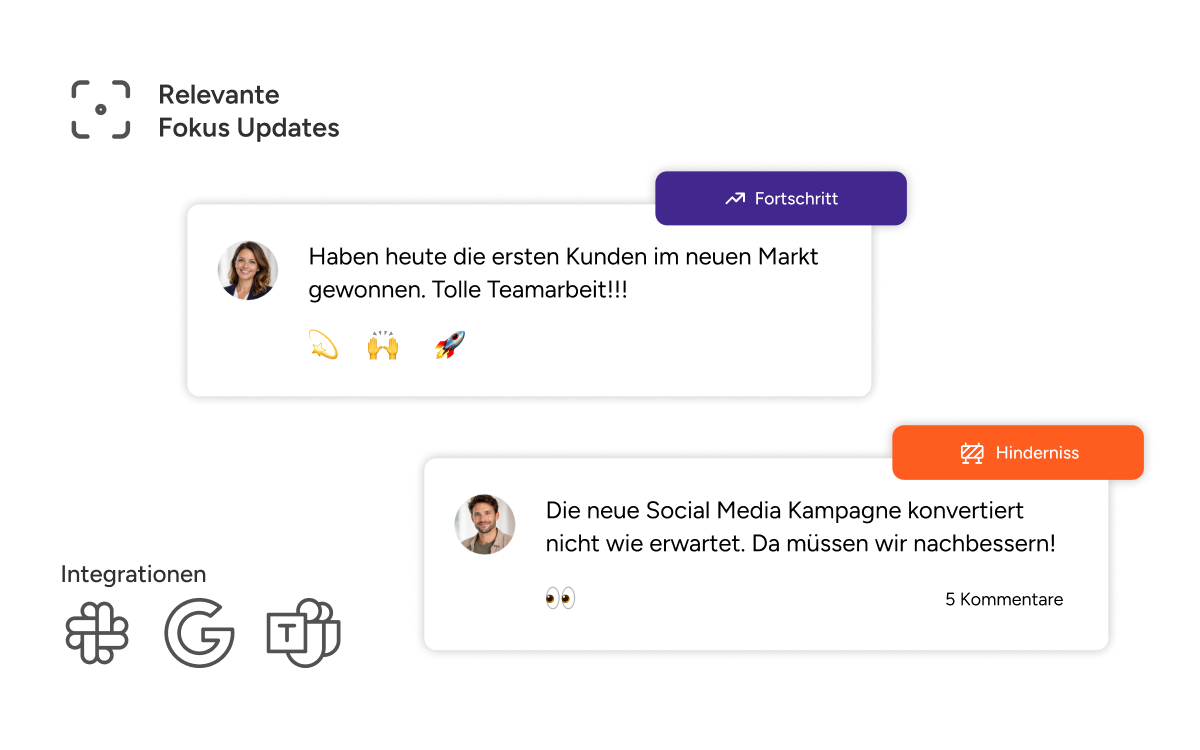
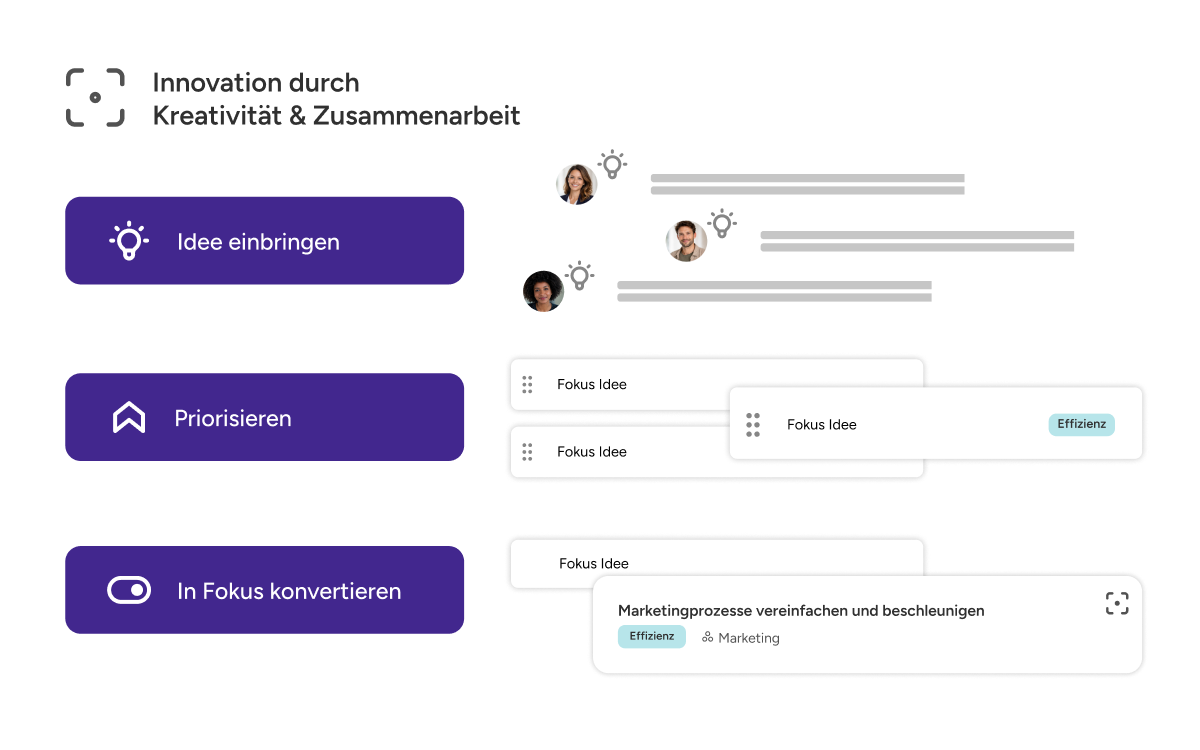
Priorities change. Quarterly cycles don't. Teams continuously adapt their focus – without waiting for the next planning round. Innovation doesn't need quarters. Agile ways of working foster creativity within company priorities.
wyrd's focus on resources gives our teams more clarity, direction and strengthens collaboration.

With wyrd, it became even more clear to us how strongly values and attitudes shape leadership.

A real game changer for effective leadership.

Compared with traditional goal management systems, organisational goals in Focus are not cascaded from the top down and are not used to measure team or employee performance. Instead, Focus connects company strategy with teams' initiatives: the direction is clear, but teams decide for themselves how they can contribute most effectively. This creates alignment without micromanagement and shifts the focus from activity to impact. Teams work more consciously on the topics that make the highest strategic contribution, rather than pushing more and more parallel initiatives at the same time. At the same time, employee innovation and engagement are strengthened.
Focus builds on the main strength of OKRs – shared alignment around important goals – while avoiding many common problems in traditional OKR processes. Instead of rigid goal cascades, administrative reviews and fixed quarterly cycles, Focus supports continuous orientation and genuine ownership within teams. The emphasis is not on following the perfect OKR framework, but on helping teams understand together what matters most right now and how they can contribute effectively.
Many processes fail because they rely too heavily on control, cascading and reporting. Strategic goals often turn into to-do lists, status updates or formal target agreements instead of creating real orientation and ownership. Real impact does not come from forms and processes, but from clarity, initiative and meaningful dialogue.
Focus helps leaders create clarity around priorities and encourages teams to take greater ownership. When employees understand what truly matters and can act independently, leaders spend less time controlling and coordinating. This creates more space for strategic leadership, development and genuine collaboration.
High-performing teams need clarity, autonomy and shared responsibility. Focus creates orientation around the most important priorities and helps teams reduce parallel work and concentrate more deliberately on what truly matters. As a result, teams work more focused on the most important topics, avoid unnecessary fragmentation and achieve visible impact faster.
Check-ins in Focus are not administrative reporting exercises but short, relevant conversations about progress, obstacles, and priorities. They help teams continuously learn and adapt their focus instead of waiting for the next quarterly review. The goal is not reporting for its own sake, but meaningful dialogue about impact and next steps.
Focus is particularly well suited for companies that want to bring strategy more effectively into teams – especially organisations that may already have struggled with traditional OKR implementations. It is a strong fit for companies seeking modern leadership approaches and more adaptive ways of working where teams take greater ownership. Instead of focusing on perfect governance, Focus emphasises clarity, focus and initiative.
Yes. Focus supports hybrid and remote teams by enabling relevant conversations directly within existing communication channels such as Slack, Microsoft Teams or Google Chat. This keeps priorities, progress and obstacles visible even when teams work across different locations. The visual focus planning also creates transparency around which topics matter most, how people can contribute and where alignment is needed.
Focus is intentionally not designed as a heavy transformation project. Teams can get started immediately by aligning with organisational goals and jointly prioritising the initiatives that contribute most to the strategy right now. The rhythm can be continuously adapted to the team’s way of working without complex rules or rigid processes. This quickly creates more clarity, alignment and shared focus in day to day work.

